Advocacy for people with disability and mental ill-health
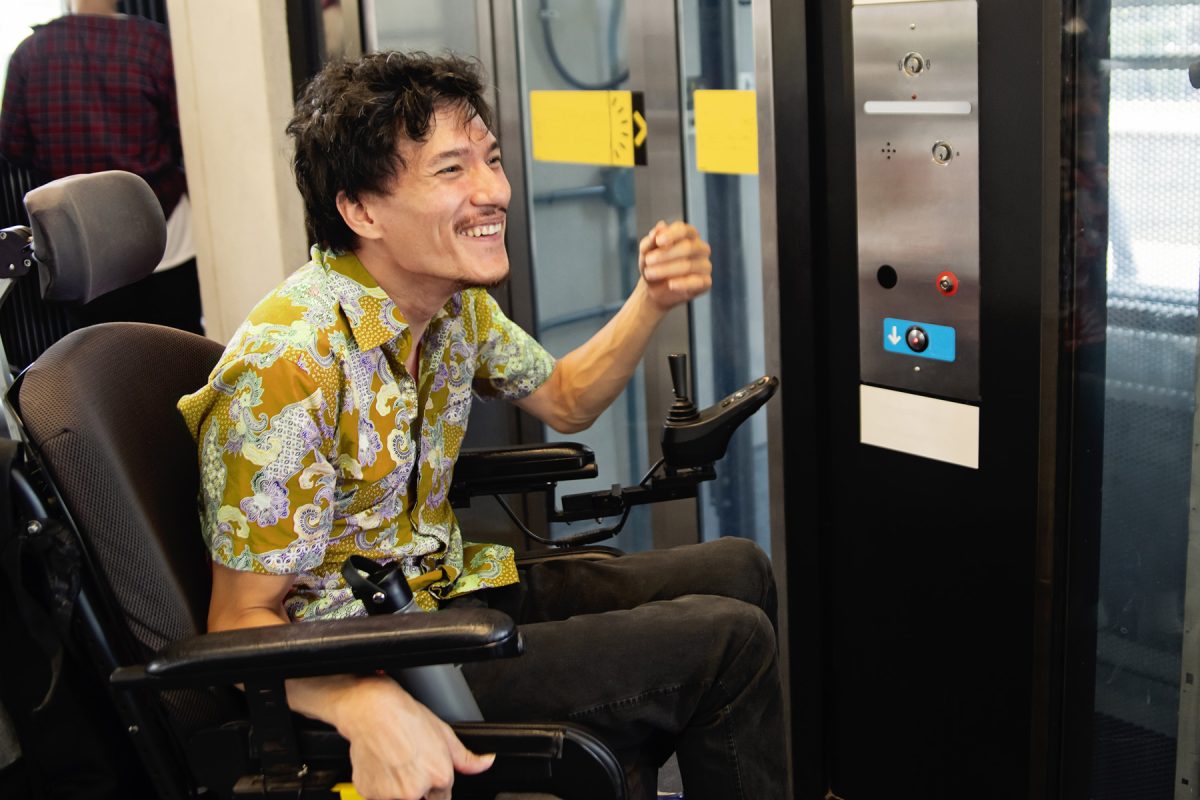
ADACAS has been providing advocacy for people with disability and mental ill-health for more than 30 years.
Our talented team are able to work with you to deal with issues that are impacting your life. This could be a matter relating to the NDIS, support with an NDIS Appeal, a housing or health issue, concerns with the education system that is impacting you or your child or a challenge with the justice system.
ADACAS will listen to you and work with you to navigate your situation ensuring your voice is heard and rights are upheld.
What issue are you facing?
Often the people we advocate for have issues in the following areas:
-

Your Health
-

Education
-

Transport
-

Housing
-

Engagement with child protection or community services
-

Justice System
-

Trustee and guardianship

Applying for NDIS funding
Applying for NDIS funding can seem daunting, but the ADACAS team can help you understand the process. The National Disability Insurance Scheme (NDIS) provides support and services to people under the age of 65, who are born with, or acquire a permanent and significant intellectual, physical, sensory, cognitive or psychological disability. The scheme also provides early intervention supports to children under the age of seven with developmental delays.
Want to know if you’re eligible for NDIS support? Explore the NDIS checklist to learn more.
- An individualised support plan that meets your current needs
- Choice over disability support providers
- Multiple support services to enable you to become your most independent self.
Support services can include assistance with:
- Therapeutic supports like physiotherapy or speech therapy, or a psychological
consultation - Help with daily tasks to maintain a clean and welcoming home environment, or
to care for yourself (toileting, showering, meal preparation) - Modifications to your home to suit your personal needs
- Acquiring mobility equipment, for example a scooter or walking frame
- Vehicle modification, so you can travel independently with ease and comfort.
- Access to other types of transport
- Employment support
Appealing a NDIS decision
If your NDIS application not been accepted, or your support is not adequate, our team can provide advice on the NDIS Scheme, or we can step in if you need us to. You may think you require more funding to sustain your current levels of support, or need more flexibility in how you spend your funds to maintain your current lifestyle.
Need help? Start the process and connect with our team.
How you can appeal a decision
If you have an issue with the National Disability Insurance Agency (NDIA) and a decision they’ve made about your funding there’s three steps you can take:
An internal review is conducted by a different decision maker employed by the NDIA. An Internal Reviewing Officer will review your case and provide you with feedback before you can pursue the next step forward.
You can request a review by:
- Calling customer service at NDIS on 1800 800 110
- Emailing your inquiry to enquiries @ndis.gov.au
- Talk to a Customer Service Officer at an NDIA office. Find their locations HERE.
- Send a written request to:
- Chief Executive Officer
- National Disability Insurance Agency
- GPO Box 700
- Canberra ACT, 2601
Important things to remember about an internal review are:
- You have three months from the date you received the decision to apply for an internal review.
- There is no fee for an internal review, however you may need to pay for reports from your GP or health professionals detailing how your disability affects your life.
- An advocate will be available to support you through the process.
Once you have received the review from the Internal Reviewing Officer, you may decide to pursue further steps. This would be appropriate if you are not satisfied with the outcomes of the review.
If you decide you are not happy with the result of the internal review, you can apply for an external merits review by the Admi nistrative Appeals Tribunal (AAT). This is a Tribunal that reviews decisions made by Government agencies, departments and ministers. Be sure to request an external merits review within 28 days of the internal review decision.
Important things to remember when applying for an external merits review:
- There is no fee for requesting an external merits review while the process is taking place
- You will need support from an advocate
- You will need a lawyer
Need help? Start the process and connect with our team.
Advocacy and making decisions
Our advocacy service is FREE.
Advocacy is taking action to challenge what is unfair and unjust. As your advocate, ADACAS can help express your views and help you to stand up for your rights if you have a problem. We’ll work by your side, making your voice stronger and louder.
At ADACAS, we work with individuals and groups to protect and defend their human rights. We want to enhance our clients’ rights and dignity, while empowering them to have control over the decisions made in their life. We can support individuals and groups with:
- NDIS issues and appeals
- Access to and quality of aged care, mental health and disability services
- The rights of parents with disabilities and child protection
- Mental healthcare rights
- Housing
- Access to Justice
- The National Redress Scheme
- Health
- Education
- Employment
- Discrimination and complaints
As a team we can connect you with the experts you may need to find solutions, such as lawyers, health and community professionals, and human rights agencies. Need to understand advocacy through AUSLAN? Visit Deaf Australia’s website for more.
Having issues with a provider or service?
ADACAS can help you if you’re experiencing problems with a service provider. No matter the size of the problem, our team can help you navigate a solution to fix it.
A step-by-step guide for advocating for yourself
Want to self advocate without our help? Here’s our step-by-step list to help you get started to resolve a problem with your service provider. We’ve provided an example of a client wanting to change their GP to better suit their needs, and how they might resolve their problem by advocating for themselves using our step-by-step guide. If you need assistance at any stage, ADACAS can help.
Clearly describe what the problem is, how it affects you, your work or study, and how it makes you feel.
For example, you may be experiencing issues with your General Practitioner (GP) – you may have concerns about the quality of care, you may not be getting the care you require, or their approach may not align with your needs. We have used this example to illustrate the steps below.
Explain who is causing the issue, whether it’s an individual or a group.
Your GP is the main cause of the issues, causing problems with your treatment plan
Who is affected by the problem, and how are they affected by it?
You are directly impacted by the problem, as well as your carer, family and friends, who assists you with the treatment plan.
Tell us what you’d like to see changed. Think about what is important to you, and what you are willing to negotiate on.
Would you like to see your GP change the treatment plan? Would you like to find another GP that aligns more with your beliefs and opinions?
Think about the ways you might be able to solve the problem you’ve described, or what might lead you to your outcome.
Possible solutions may include discussing the issues with your GP and expressing how your feeling, or finding another GP who is more aligned with, and believes in the treatment plan you wish to be on.
Decide which solution suits you best.
Would you feel comfortable having the discussion with your current GP – or is it best to move on to another GP?
Think about which solution suits you and your healthcare needs.
Is it time for a change of GP? Or is your current GP still serving your needs, with this one thing that needs to be changed.
Keeping written notes (either in a notebook or digitally) can help you remember what has happened, and come back to solutions to test them.
Make notes of your current GP, explaining the issues, and find other GP’s within your area you might try if you were to change GP’s. Try and write a list of the benefits and challenges of changing.
Are you able to meet with the person responsible for the problem? Also consider whether you need someone else to support you.
Meet with your current GP to discuss your issues. Feel free to take a support person with you, so you feel comfortable and confident expressing how you feel to your General Practitioner
Seek an agreement, and get it in writing if possible.
If you can’t agree on a solution, you need to decide if you want to continue with the service or look for a new service that may suit you better.
Come to an agreement with your GP. You may both agree that your treatment plan needs to be changed, or a change of doctor is what might suit best.
If you need to make a complaint, the section below contains a series of organisations
that may be able to help.
If you need assistance at any stage, ADACAS can help.
Supported Decision Making
ADACAS works with people with disability, mental ill-health and older people to support them to make informed decisions for themselves. The framework we use is called Supported Decision Making.
As a Human Rights organisation, we believe everyone has the right to make decisions about the things that affect their lives. Having choice and control over the decisions that effect you is vital to ensuring your equal participation in life.
Many people find that others are often making decisions on their behalf without being included or asked what they want.
The team at ADACAS can help you to become a more confident decision maker.
ADACAS has being working with young people with disability in the education system and also in the juvenile justice system to support young people to grow their decision making capability.
If you are looking for support from an advocate, please click below.